
Why Many Play-to-Earn Models Fail (Economic Breakdown)
What you'll learn in this Analysis
Why Play-to-Earn (P2E) games grow fast—but collapse faster
The core economic flaw behind most P2E systems
The difference between real value vs circular economies
A framework to evaluate any P2E or GameFi project
1. The Promise of Play-to-Earn
Play-to-Earn introduced a powerful idea:
“Play games and earn money”
This led to:
Massive user growth
Global adoption (especially in developing countries)
Explosive token price increases
Example:
Axie Infinity
👉 At its peak:
Millions of users
Billions in market value
Key Insight
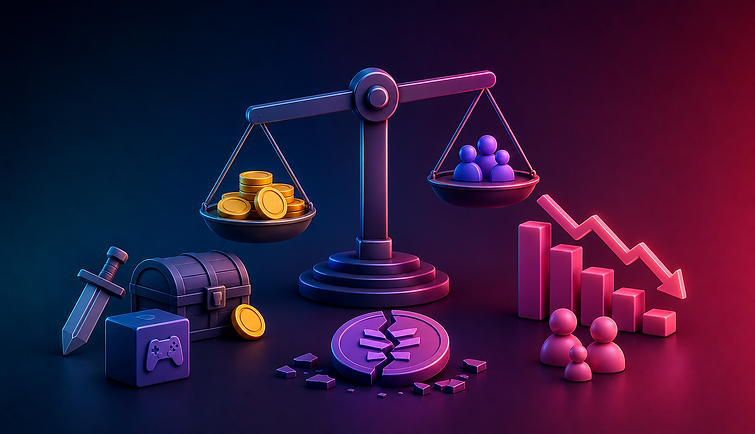
Most P2E systems are not real economies. They are reward distribution systems.
2. How P2E Actually Works
Typical Model:
New players join
They buy in-game assets
Existing players earn rewards
Tokens are sold for profit
👉 Sounds good… until you look deeper.
3. The Core Problem: Circular Economy
Where does the money come from?
In most P2E systems:
New players fund old players
No external revenue
No real economic output
👉 This creates:
A circular system (not sustainable)
The Critical Issue
If:
New users stop joining
Then:
Rewards collapse
Token price drops
Users leave
👉 System breaks
4. The Collapse Cycle
Step-by-Step
High rewards attract users
Rapid growth
Token inflation increases
Selling pressure rises
Token price drops
Rewards lose value
Users exit
👉 This is the P2E death spiral
5. Why Axie Infinity Failed (Economic View)
Key Issues:
1. Inflationary Rewards
Tokens (SLP) were constantly minted
No strong burn mechanism
👉 Supply ↑ → Price ↓
2. No External Revenue
No real income source
Dependent on new players
👉 Unsustainable
3. Misaligned Incentives
Players played for money
Not for fun
👉 When rewards dropped:→ Users left
4. Weak Retention
No long-term engagement
No gameplay depth
👉 Economy collapsed
6. The Key Economic Principle
A sustainable system must create value. Not just redistribute it.
P2E Model
Redistribution system
New users fund old users
Sustainable Model
External revenue
Real demand
Value creation
7. What Actually Works (GameFi Evolution)
Play-and-Earn (Better Model)
Instead of:
Play → Earn money
New approach:
Play → Enjoy → Earn secondary rewards
Key Improvements
1. Fun First
Game must be enjoyable
2. External Revenue
NFT sales
Fees
Ecosystem income
3. Controlled Emissions
Limited token supply
Balanced rewards
4. Strong Retention
Players stay without rewards
8. Evaluation Framework
Before entering any GameFi project, ask:
1. Where does money come from?
New users or real revenue?
2. Is the token inflationary?
Or controlled?
3. Is the game actually fun?
Would users play without rewards?
4. What happens if growth slows?
👉 If answers are weak→ System will fail
9. Red Flags in P2E
Warning Signs
Extremely high rewards
No real gameplay depth
Heavy reliance on new users
Rapid token inflation
👉 These almost always lead to collapse
10. Real Insight (Critical)
You cannot print value. You must create it.
👉 Most P2E models try to:
Print rewards
👉 Few succeed in:
Creating sustainable economies
Final Takeaway
Most Play-to-Earn systems fail because:
❌ They rely on new users
❌ They inflate tokens
❌ They lack real value
Successful systems require:
✅ Real demand
✅ Sustainable economics
✅ Strong gameplay
👉 Without these:
The system will eventually collapse


